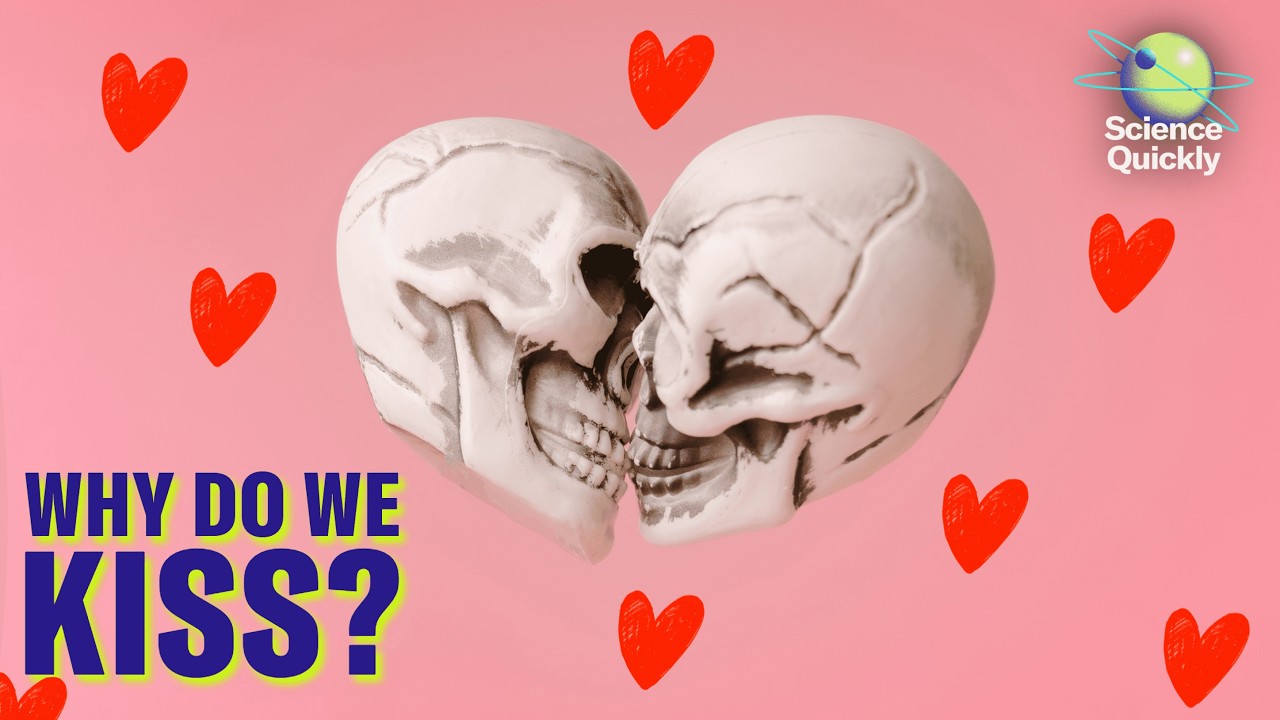
The Evolutionary Roots of Kissing: From Primates to Human Bonding
The act of pressing one's lips against another's, be it a partner's mouth, a child's forehead, or even a sacred object, is universally recognized as a powerful gesture. A simple kiss can convey everything from profound affection and romantic attraction to respectful greeting or a fond farewell. Biologically, this seemingly straightforward action triggers a cascade of neurochemical responses, notably the release of oxytocin, a hormone critical for fostering bonding and attachment. But where did this profound human behavior originate? Its roots, far from being a modern or purely human invention, stretch back millions of years into our primate lineage, evolving from essential survival and social behaviors.
The Primal Origins of the Kiss: Tracing Back Millions of Years
Modern scientific inquiry, particularly a 2025 phylogenetic analysis of primate behaviors, suggests that non-aggressive mouth-to-mouth kissing is an ancient trait. This analysis posits that such intimate contact likely evolved between 16.9 and 21.5 million years ago in the common ancestor of Hominidae – the family that includes humans and great apes like chimpanzees, bonobos, gorillas, and orangutans. This deep evolutionary timeline challenges previous assumptions, grounding the kiss not as a novel human creation, but as a persistent behavior with a rich biological history.
Evidence for this ancient practice is observable in several extant species. Chimpanzees, bonobos, and orangutans engage in forms of lip contact that mirror human kissing behaviors. Furthermore, anatomical and behavioral clues even suggest that Neanderthals, our extinct human relatives, also embraced the act of kissing. One compelling theory, known as the "groomer's final kiss" hypothesis, provides a fascinating insight into its possible origin. This hypothesis suggests that human kissing evolved from the concluding mouth-to-skin contact phase of grooming rituals in ancestral great apes. In this scenario, after manual picking to remove parasites and debris from fur, the groomer would use lip protrusion and suction to remove any remaining ectoparasites. This final suction step, a consistent social bonding ritual in modern great apes, likely persisted and adapted in humans even after the evolutionary loss of body hair. The focus shifted from fur-maintenance to direct mouth-to-mouth or mouth-to-skin contact, evolving into a sophisticated form of hygiene, affiliation, and ultimately, emotional connection.
Empirical observations confirm this terminal oral phase in the grooming behaviors of chimpanzees and gorillas, lending strong support to a biological continuity. In chimpanzees, for instance, "pant-kissing" – an open-mouth contact without tongue involvement – serves crucial social functions. It's observed during greetings, reconciliations after conflicts, and as an audience-sensitive signal of affiliation, directly paralleling many social uses of human kissing. Bonobos, renowned for their complex social structures and frequent intimate behaviors, often use prolonged mouth-to-mouth contact, sometimes with tongue involvement, not only for sexual pleasure but also as a powerful tool for conflict resolution, stress reduction, and reinforcing social bonds within their communities. These primate behaviors highlight how a simple lip touch can signify acceptance, peace, and deep connection across species.
Beyond Affection: The Multifaceted Functions of a Kiss
While often associated purely with romance, the kiss serves a remarkable array of functions in human interaction, each rooted in our biological and social evolution.
- Mate Assessment: A romantic kiss is far more than just a tender gesture; it's a sophisticated biological screening process. Through sensory cues like taste and smell, we unconsciously gather vital information about a potential partner's health, immune compatibility, and genetic fitness. The exchange of pheromones during an erotic kiss can provide subtle, yet powerful, signals that contribute to attraction and reproductive success. It's why that crucial first kiss can feel so right – or so wrong.
- Bonding & Attachment: The release of oxytocin, often called the "love hormone," during a kiss is paramount to forging and strengthening emotional ties. Parental kisses, whether on a child's cheek or forehead, are vital for promoting security, comfort, and a strong parent-child bond. In romantic relationships, regular kissing helps maintain intimacy, reduces stress, and reinforces feelings of love and commitment, acting as a natural balm for the soul.
- Social Rituals & Respect: Not all kisses are romantic. Many cultures use kissing as a form of greeting, a sign of respect, or a heartfelt farewell. A kiss on the hand can signify chivalry or deference, while touching one's lips to an object like a religious icon or the Blarney Stone is a deeply embedded cultural or spiritual ritual, believed to impart blessings or good fortune. These acts demonstrate the flexibility of the kiss as a symbol of reverence and tradition.
- Arousal & Intimacy: Erotic kissing, particularly mouth-to-mouth with tongue involvement, is a powerful precursor and enhancer of sexual arousal. It stimulates nerve endings, increases heart rate, and heightens the senses, paving the way for deeper intimacy. The vulnerability and trust inherent in such a kiss create a profound connection, making it an indispensable part of human sexual expression.
The Cultural Tapestry of Kissing: A Global Perspective
Despite its deep evolutionary roots, the practice of romantic or sexual mouth-to-mouth kissing is far from universal across human cultures. A cross-cultural anthropological study revealed that it occurs in only about 46% of 168 societies surveyed. This surprising statistic highlights the profound influence of cultural norms on even our most seemingly innate behaviors. In many subsistence-level groups, such as certain Amazonian and African peoples, mouth-to-mouth kissing is absent, often viewed as unhygienic, unnecessary, or even repulsive. This perspective challenges the common Western assumption that kissing is a natural, universal expression of romantic love.
Historically, however, the kiss has a long and documented presence. Records indicate its existence dating back at least to 2500 BCE in Mesopotamian texts, where it appears in both ritualistic and intimate contexts. This ancient evidence predates its widespread dissemination through Indo-European migrations, effectively refuting the notion of kissing as a modern or exclusively Western invention. In contemporary settings, the acceptability and meaning of a kiss vary wildly by context. A quick peck on the cheek might be a polite greeting in one society, while public displays of romantic kissing could be heavily frowned upon or even prohibited in others, often associated solely with private sexuality. Understanding these diverse interpretations is crucial to appreciating the complex tapestry of human interaction. To delve deeper into the fascinating variations of this act, explore our article on Kissing Across Cultures: How Global Norms Shape This Ancient Act.
The Other Kiss: A Rock and Roll Phenomenon
While our exploration primarily focuses on the biological and evolutionary act of kissing, the word "Kiss" also resonates powerfully in another, distinct cultural sphere: rock and roll. Formed in 1973 by Paul Stanley, Gene Simmons, Peter Criss, and Ace Frehley, the American rock band Kiss transcended the music scene to become global icons. Rising from New York's vibrant rock landscape, they became one of the most successful Gold Record Award-winning groups in American history, selling over 100 million albums worldwide and earning countless accolades, including induction into the Rock & Roll Hall of Fame.
Kiss became legendary for their theatrical live performances, which were as much visual spectacles as they were concerts. Known for their elaborate stage makeup, extravagant outfits, pyrotechnics, and other shocking visual effects, they transformed rock music into a captivating, larger-than-life experience. Iconic hits like "Rock and Roll All Nite," "Beth," and "Detroit Rock City" became anthems for generations of fans. Their unparalleled impact on music and popular culture cemented their status as one of the most influential and best-selling rock groups from the 1970s through the early 2000s. While our focus today is on the biological act, it’s impossible to discuss the word 'Kiss' without acknowledging the legendary band that etched its name into music history. Discover more about their iconic journey in Kiss: The Rock Band's Unparalleled Legacy in Music History.
Conclusion
From the subtle lip movements of a great ape removing parasites to the passionate embrace of human lovers, the kiss represents a rich evolutionary journey. What began as a practical grooming behavior millions of years ago has transformed into a sophisticated language of human connection, deeply intertwined with our biology, emotions, and cultural expressions. It's a testament to our shared primate heritage and our unique capacity for profound emotional bonding. Whether a gesture of affection, a mark of respect, or an act of intimacy, the kiss remains a potent and enduring symbol of what it means to connect, both with others and with our ancient past.